Foot & Ankle Deformity Correction in Valhalla, NY
Foot and ankle deformity correction addresses structural misalignment that can cause pain, instability, uneven pressure, and difficulty walking or wearing shoes. Treatment may involve supportive footwear, orthotics, bracing, or surgery, depending on the condition and its severity. Dr. Fred DeLucia, DPM, FACFAS, FACPM, is a dual board-certified foot and ankle surgeon specializing in complex adult and pediatric reconstruction. At Ankle and Foot Surgical Specialists in Valhalla, NY, he provides personalized care focused on improving alignment, stability, and everyday function.
What is Foot & Ankle Deformity Correction?
Foot and ankle deformity is the structural abnormality caused by misalignment of the bones of the foot and ankle.
The deformity can be:
- Congenital (inherited and present from birth)
- Acquired (due to injuries, neuro issues, muscular imbalances, infections, etc.)
Foot and Ankle deformity correction is the repair of the abnormality by restoring the normal alignment of the bones in the foot & ankle, surgically or non-surgically.
Indications for Foot & Ankle Deformity Correction
Notable indications for foot and ankle deformity correction can be:
- Difficulty walking due to an unusual gait
- Problems with balance or signs of disability
- Pain in the foot or trouble wearing shoes
- Thick, hard skin (callous) and pressure sores
- Inflammation of the foot and ankle bones
- Pain in the knees, hips, back and head
Preparing for the Procedure
To prepare you for the surgery, your surgeon is likely to:
- Check your general health and review your medical conditions through specific tests.
- Ask you to stop taking any medications or make changes to the dosage or timings.
- Tell you to have a dental check-up and get any problems dealt with to avoid infection.
- Advise you to arrange for safe transport home after the surgery.
- Recommend that you not eat or drink for a few hours before the operation.
Procedure for Foot & Ankle Deformity Correction
Mild deformities can be corrected with non-surgical treatments including physical therapy, orthoses (splints or braces or other artificial external devices), special footwear and medications.
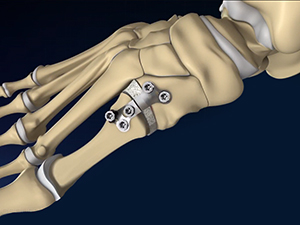
If the deformity is severe, surgery is recommended. The procedure, known as an osteotomy, is performed under general or regional (affecting only the leg or foot) anesthesia.
During the procedure:
- A small incision is made at the site and the affected part is accessed.
- Extra or unwanted bone wedges and soft tissues are cut and removed.
- Bones are realigned, soft tissues are released, and tendons or ligaments are adjusted.
- The bones are held in the correct position and stabilized with tiny wires, pins or plates.
- The incision is closed with small stitches and a dressing or bandage is applied.
Postoperative Care
As you recover from the procedure, you will need to:
- Carefully follow the postoperative instructions
- Provide adequate rest to your foot and ankle
- Ensure minimal weight bearing during initial days
- Check your progress with your surgeon on a regular basis
Additionally, you may be told to use a splint, cast or a brace along with special shoes for a specific period to ensure a safe recovery and prevent the deformity from returning.
Benefits of Foot & Ankle Deformity Correction
Benefits of deformity correction include:
- Minimally invasive procedure
- Near normal, painless and stable foot and ankle
- Improved mobility or function of the foot and ankle
- Allows normal shoe wear and ensures better gait
- Cosmetically improved appearance of the foot and ankle
Risks Associated with the Procedure
As with any surgery, deformity correction comes with risks such as:
- Infection, swelling or stiffness
- Wound hematoma (bleeding)
- Problems of healing
- Blood clots in the leg
- Nerve injury with numbness
- Restriction of joint movement
- Shortened foot
- Development of arthritis later in life
- Additional surgery due to non- or mal-union
Why Choose Dr. DeLucia for Foot & Ankle Deformity Correction in Valhalla, NY?
- Dual Board Certification: Certified by the American Board of Foot and Ankle Surgery and the American Board of Podiatric Medicine.
- Reconstructive Surgery Expertise: Specializes in complex foot and ankle reconstruction for adults and children.
- Trauma Surgery Focus: His clinical interests include the treatment of foot and ankle injuries.
- Professional Fellowships: Fellow of the American College of Foot and Ankle Surgeons and the American College of Podiatric Medicine.
- Personalized Care in Valhalla: Treatment focused on individual functional needs and activity goals at a convenient Westchester County location.
When does a foot or ankle deformity need treatment?
Treatment may be appropriate when misalignment causes pain, instability, pressure areas, or difficulty walking and wearing shoes. The need for correction depends on symptoms, function, and the underlying condition.
Can foot and ankle deformities be treated without surgery?
Yes. Supportive footwear, orthotics, bracing, and physical therapy may improve comfort and function. These treatments do not necessarily reverse a fixed structural deformity, but they may help patients manage symptoms without surgery.
What procedures are used to correct foot and ankle deformities?
Options include bone realignment through osteotomies, tendon repair or transfer, ligament reconstruction, and joint fusion. Several procedures may be combined to address both alignment and muscle imbalance.
Is foot and ankle deformity correction always minimally invasive?
No. Selected corrections may use smaller incisions, while complex deformities may require open surgery. The approach depends on the affected structures and the correction needed.
How long does recovery take after deformity correction surgery?
Recovery varies with the procedures performed. Extensive reconstruction may require several months, with improvement continuing for a year or longer. Your surgeon determines weight-bearing restrictions and the need for a cast, boot, or rehabilitation.
Can a foot or ankle deformity return after surgery?
Yes. Recurrence or incomplete correction is possible, particularly if an underlying condition continues to affect alignment. Other risks include infection, nerve injury, stiffness, and incomplete bone healing. Follow-up care helps monitor recovery.
Schedule a Foot & Ankle Deformity Consultation in Valhalla, NY
If foot or ankle misalignment is causing pain, balance problems, or difficulty walking, contact Ankle and Foot Surgical Specialists in Valhalla, NY, to schedule a consultation with Dr. Fred DeLucia. Explore treatment options and learn whether deformity correction is appropriate for your needs.