
Posterior Tibial Tendon Dysfunction Treatment in Valhalla, NY
Posterior tibial tendon dysfunction occurs when an important arch-supporting tendon becomes damaged or weakened, causing inner ankle pain and sometimes a progressive flattening of the foot. Treatment aims to relieve symptoms and support walking function. Dr. Fred DeLucia, DPM, FACFAS, FACPM, is a dual board-certified foot and ankle surgeon specializing in reconstructive surgery. At Ankle and Foot Surgical Specialists in Valhalla, NY, he provides personalized care focused on each patient’s condition, mobility needs, and daily activities.
What is Posterior Tibial Tendon?
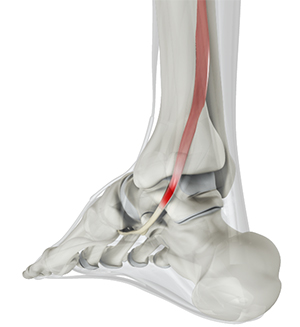
The posterior tibial tendon passes through the ankle to attach the calf muscle with the bones of the midfoot. It provides stability to the arch and supports the foot while walking. Inflammation or a tear of this tendon as a result of injury may cause dysfunction, leading to pain and the development of a flatfoot.
Symptoms
Symptoms of flatfoot include pain on the inside of the ankle that may be accompanied by swelling. Flatfoot may cause the heel to shift outwards causing pain on the outside of the ankle as well. Activities such as walking, running, and standing on your toes may aggravate pain. If treatment is delayed there may be rigidity and development of arthritis. You may have trouble walking or wearing shoes.
Diagnosis
When you present to the clinic with these symptoms, your doctor will review your medical history and perform a physical examination, testing for pain, swelling, changes in ankle position, flexibility, strength and range of motion. Imaging tests such as X-rays, MRI, CT and ultrasound scans may be ordered to visualize the tendon and rule out other abnormalities.
Treatment
Posterior tibial tendon dysfunction in its early stages may be treated with rest, cold packs, immobilization, physical therapy, steroid injection, and anti-inflammatory medication. Shoe inserts that support the arch may be recommended. Surgery may be necessary if conservative treatments fail and may include:
- Tenosynovectomy: The inflamed tendon tissue is cleaned and removed.
- Tendon transfer: The damaged tendon is replaced by another foot tendon.
- Arthrodesis: In cases where arthritis has developed, the bones are realigned and fused to form a single bone by removing cartilage.
- Osteotomy: Bones of the heel and midfoot may be cut to recreate the arch of the foot.
Why Choose Dr. DeLucia for Posterior Tibial Tendon Dysfunction in Valhalla, NY?
- Dual Board Certification: Certified by the American Board of Foot and Ankle Surgery and the American Board of Podiatric Medicine.
- Reconstructive Surgery Expertise: Specializes in complex adult and pediatric foot and ankle reconstruction.
- Professional Fellowships: Fellow of the American College of Foot and Ankle Surgeons and the American College of Podiatric Medicine.
- Personalized Care: Treatment focused on individual symptoms, functional needs, and activity goals.
- Convenient Valhalla Location: Foot and ankle care for patients in Westchester County.
What are the early signs of posterior tibial tendon dysfunction?
Early signs include pain or swelling along the inner ankle and arch, especially during activity. Difficulty pushing off or rising onto tiptoe may also occur.
Does posterior tibial tendon dysfunction always cause flatfoot?
Not immediately. Tendon pain may develop before visible arch changes. As supporting structures weaken, the arch can flatten and the heel may shift outward.
Can posterior tibial tendon dysfunction be treated without surgery?
Yes. Many patients benefit from activity modification, supportive footwear, orthotics, bracing, or physical therapy. A walking boot may temporarily protect the tendon.
How is posterior tibial tendon dysfunction diagnosed?
Diagnosis involves a medical history and examination of alignment, flexibility, and strength. Weight-bearing X-rays assess the bones; MRI or ultrasound may evaluate tendon damage when needed.
When is surgery recommended?
Surgery may be considered when appropriate nonsurgical treatment does not adequately relieve pain. Options depend on tendon damage, foot flexibility, deformity, and arthritis.
Can I continue exercising with posterior tibial tendon dysfunction?
Avoid activities that worsen symptoms. Lower-impact exercise may be appropriate, but ask your clinician which activities are suitable for your condition and treatment stage.
Schedule a Consultation for Posterior Tibial Tendon Dysfunction in Valhalla, NY
If inner ankle pain, arch changes, or difficulty walking is affecting your daily life, contact Ankle and Foot Surgical Specialists in Valhalla, NY, to schedule a consultation with Dr. Fred DeLucia. Discuss your symptoms and explore treatment options for posterior tibial tendon dysfunction.