Cavus Foot Reconstruction in Valhalla, NY
Cavus foot reconstruction addresses a high-arched foot that causes persistent pain, uneven weight distribution, or foot and ankle instability. Surgery may be considered when orthotics, supportive footwear, bracing, and physical therapy do not provide sufficient relief. Dr. Fred DeLucia, DPM, FACFAS, FACPM, is a dual board-certified foot and ankle surgeon specializing in complex adult and pediatric reconstruction. At Ankle and Foot Surgical Specialists in Valhalla, NY, he provides personalized care focused on improving alignment, stability, and everyday foot function.
What is Cavus Foot Reconstruction?
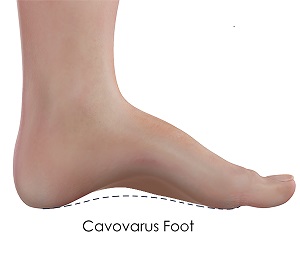
Cavus foot reconstruction is a deformity correction surgery to treat cavus foot which is also called pes cavus or high arches. Cavus foot occurs when the arch on the bottom of the foot that runs from the toes to the heel is arched more than normal. This causes pain and instability in the foot while walking, standing, and running. Cavus foot reconstruction aims to correct the bone shape, its malalignment, muscle imbalance, and foot and ankle instability.
The goal of cavus foot reconstruction is to bring the high arch to a normal position so that it touches the ground, called a plantigrade foot. In addition, the surgeon ensures that the foot and ankle joint is preserved as much as possible without significant loss of bone and muscle tissue. Since it is a foot deformity, structural alterations are made in the foot by cutting and reshaping the bones called an osteotomy. Correction surgery may also include tendon release and bone fusion.
What are the Indications for Cavus Foot Reconstruction?
Cavus foot reconstruction is recommended only after non-surgical treatments such as stretching exercises and foot orthotics have failed to correct the high arch or cavus foot.
Pre-Surgical Preparation for Cavus Foot Reconstruction
Before scheduling the foot reconstruction surgery, your doctor performs a thorough foot and ankle examination.
- Your overall health condition, medical history, medication history, and lab reports are reviewed.
- Your doctor may also perform radiographic exams such as X-ray’s to get a detailed view of the foot and ankle joint to help plan the surgery.
Cavus Foot Reconstruction Procedure
As every deformity is unique, there is no specific technique or rule that is applied on all candidates universally. In practice, your surgeon may perform a combination of 2 or 3 procedures during the surgery to reconstruct the cavus foot.
Cavus foot reconstruction involves the following steps:
- The patient is administered general anesthesia which has a sleep-inducing effect on the body. Thus, they will not wake up or feel any pain during the procedure.
- One or two small incisions are made along the site of operation.
- Through these small incisions, retractors are inserted to retract the muscles away from the operative area and provide access to the bones and internal soft tissues in the foot.
- This minimizes muscle and soft tissue damage and reduces blood loss during surgery.
- To correct the structural deformity, your surgeon may adopt any of these procedures:
- Tendon Release
- In this procedure, a tendon is cut or disconnected to increase the range of movement. The commonly targeted tendons include:
- Achilles tendon
- Plantar fascia
- Deltoid ligament or the ankle ligament may also be incised to help in tendon release.
- In this procedure, a tendon is cut or disconnected to increase the range of movement. The commonly targeted tendons include:
- Osteotomy
- In this procedure, the bones in the foot and ankle joint are cut and shaped to give them a more natural appearance.
- Arthrodesis
- In this procedure, two or more bones are fused together to provide stability and shape to the foot and ankle joint.
- Tendon Release
- Tiny wires, pins, or plates may be used to stabilize the bones and keep them in place.
- Once the foot has attained the desired alignment and appearance, your surgeon closes the incisions.
- The incisions may be covered with a waterproof dressing to keep the incision site clean and dry.
Post-Surgical Care After Cavus Foot Reconstruction
You may be required to stay in the hospital for a night or two or until the time you are able to walk comfortably.
- You are advised to take adequate rest to allow healing for your foot and ankle.
- Ensure minimal weight-bearing during the initial days.
- You may be told to use a cast, brace or splint along with orthotic shoes for a specific period to ensure a safe recovery and prevent deformity recurrence.
You are required to visit the hospital for the first few weeks after the surgery for a follow-up to monitor your recovery.
What are the Risks and Complications of Cavus Foot Reconstruction?
As with any surgical procedure, cavus foot reconstruction may also carry some amount of risk. These may include:
- Pain or swelling at the operation site
- Infection
- Damage to the surrounding tissues
- Delayed recovery
- Side effects of anesthesia
- Need for revision surgery
Why Choose Dr. DeLucia for Cavus Foot Reconstruction in Valhalla, NY?
- Dual Board Certification: Certified by the American Board of Foot and Ankle Surgery and the American Board of Podiatric Medicine.
- Reconstructive Surgery Expertise: Specializes in complex foot and ankle reconstruction for adults and children.
- Professional Fellowships: Fellow of the American College of Foot and Ankle Surgeons and the American College of Podiatric Medicine.
- Personalized Care: Treatment focused on the patient’s condition, functional needs, and daily activities.
- Accessible Valhalla Location: Foot and ankle surgical care conveniently located in Westchester County.
Does every high-arched foot need surgery?
No. High arches that cause no symptoms may not require treatment. When symptoms develop, supportive footwear, custom orthotics, bracing, or physical therapy may help. Reconstruction is considered when persistent pain, instability, or deformity continues to interfere with daily activities despite appropriate nonsurgical care.
What causes cavus foot?
Cavus foot may be an inherited structural variation or develop after an injury. It can also be associated with neurological conditions, including Charcot-Marie-Tooth disease. Identifying the cause is important because an underlying nerve or muscle disorder may affect treatment planning and the likelihood of progression.
What procedures are used in cavus foot reconstruction?
Reconstruction may combine bone realignment through osteotomies, tendon transfers, soft-tissue releases, and ligament repair. Joint fusion may be considered for selected rigid or arthritic deformities. The combination depends on alignment, flexibility, muscle balance, and associated foot or ankle problems.
When can I walk after cavus foot reconstruction?
Many patients need at least six weeks without placing weight on the operated foot, and some require longer protection. A cast or boot and an assistive device may be necessary. Walking resumes gradually when the surgeon confirms that healing is sufficient.
How long does recovery take after cavus foot reconstruction?
Recovery progresses over several months, with the final result often taking approximately a year to assess. The timeline depends on the procedures performed, bone healing, overall health, and rehabilitation. Return to work, exercise, and sports requires individualized guidance.
Can cavus foot return after reconstruction?
Yes. Deformity can recur, particularly when an underlying neurological condition continues to affect muscle balance. Surgery aims to improve alignment and function, but it cannot guarantee a permanently normal foot. Continued follow-up and supportive footwear or orthotics may remain necessary.
Schedule a Cavus Foot Consultation in Valhalla, NY
If high arches are causing foot pain, repeated ankle sprains, or difficulty walking, contact Ankle and Foot Surgical Specialists in Valhalla, NY, to schedule a consultation with Dr. Fred DeLucia. Learn about your treatment options and whether cavus foot reconstruction may help improve your comfort and stability.