Achilles Tendon Repair in Valhalla, NY
Achilles tendon repair reconnects a torn tendon to help restore the strength needed for walking, pushing off, and other activities. Treatment may involve surgery or a structured nonsurgical rehabilitation program, depending on the injury and the patient’s needs. Dr. Fred DeLucia, DPM, FACFAS, FACPM, is a dual board-certified foot and ankle surgeon specializing in reconstructive and trauma surgery. At Ankle and Foot Surgical Specialists in Valhalla, NY, he provides personalized care focused on improving function and supporting a safe return to daily activities.
Achilles Tendon Anatomy
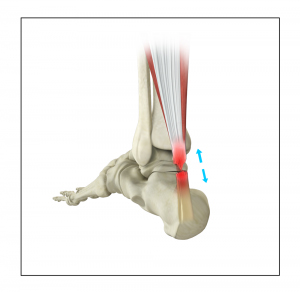
Tendons are the soft tissues connecting muscle to bone. The Achilles tendon is the longest tendon in the body and is present behind the ankle, joining the calf muscles with the heel bone. Contraction of the calf muscles tightens the Achilles tendon and pulls the heel, enabling the foot and toe movements necessary for walking, running and jumping.
Achilles Tendon Injury
The Achilles tendon is often injured during sports activities, resulting in an inflammatory condition called tendonitis, which is characterized by swelling and pain. In some cases, severe injury results in a tear or rupture of the Achilles tendon, requiring immediate medical attention.
Causes of Achilles Tendon Injury
The tear or rupture of the Achilles tendon is commonly seen in middle-aged men involved in sports activities. The tendon ruptures as a result of weakness due to advanced age or from sudden bursts of activity during certain sports such as tennis, badminton, and basketball. Having a history of tendonitis, certain diseases such as arthritis and diabetes, or certain antibiotics can make you more susceptible to ruptures.
Symptoms of Achilles Tendon Injury
The classic symptom of an Achilles tendon rupture is the inability to rise up on your toes. You may often experience a “popping” or “snapping” sound with severe pain, swelling, and stiffness in the ankle region, followed by bruising of the area. If the tendon is partially torn and not ruptured, pain and swelling may be mild.
Diagnosis of Achilles Tendon Injury
The diagnosis of a torn or ruptured Achilles tendon starts with a physical examination of the affected area. Thompson test may be performed where the calf muscle is pressed with you lying on your stomach to check whether the tendon is still connected to the heel or not. In certain cases, an ultrasound or MRI scan may be ordered for a clear diagnosis.
Treatment of Achilles Tendon Injury
The main objective of treatment is to restore the normal physiology of the Achilles tendon so you can perform your normal activities.
Treatment of a torn or ruptured Achilles tendon includes non-surgical or surgical methods. Immediately following a torn or ruptured Achilles tendon you should employ the R.I.C.E. method as follows:
- Rest the injured leg.
- Ice packs should be applied at the site of injury to prevent swelling.
- Apply compression bandages to the injured area to prevent swelling.
- Elevate the injured foot to reduce swelling.
Other non-surgical methods involve casting the injured area for six weeks for the ruptured tendon to reattach itself and heal. After removal of the cast, physical therapy is recommended to prevent stiffness and restore lost muscle tone.
Indications for Achilles Tendon Repair
Surgery may be recommended especially for competitive athletes, those who perform physical work, or in instances where the tendon re-ruptures.
Surgery is contraindicated if you have unhealthy skin, an active infection, are diabetic, smoke and lead a sedentary lifestyle, and are unable to confer with the requirements of postoperative recovery.
Achilles Tendon Repair Procedure
The surgery is usually performed as an outpatient procedure, under a nerve block and sedation. An incision is made at the back of your leg. Your surgeon will stitch the torn tendon back together with strong sutures. Your surgeon may reinforce the Achilles tendon with other tendons depending on the extent of the tear. If the tendon has avulsed or pulled off the heel bone, your surgeon will reattach the tendon to the heel bone.
Postoperative Care following Achilles Tendon Repair
Following surgery, your leg will be placed in a cast or splint from your toes to just below your knee. You will be advised not to bear weight on your operated foot and will be prescribed crutches or a walker to help you move around. You will be prescribed a boot or cast after about 2 to 6 weeks, following which you will be allowed to bear your full weight on your leg. You will be advised physical therapy to regain strength and movement in your ankle and calf muscles. You will be able to regain full movement by 6 months and complete recovery in a year.
Complications of Achilles Tendon Repair
As with all surgical procedures, Achilles tendon repair may be associated with certain complications such as infection, bleeding, nerve injury, and blood clots.
Why Choose Dr. DeLucia for Achilles Tendon Repair in Valhalla, NY?
- Dual Board Certification: Certified by the American Board of Foot and Ankle Surgery and the American Board of Podiatric Medicine.
- Reconstructive and Trauma Expertise: Specializes in adult and pediatric foot and ankle reconstruction and trauma surgery.
- Professional Fellowships: Fellow of the American College of Foot and Ankle Surgeons and the American College of Podiatric Medicine.
- Personalized Care: Treatment focused on individual functional needs and activity goals.
- Convenient Valhalla Location: Foot and ankle surgical care for patients in Westchester County.
Does every Achilles tendon rupture require surgery?
No. Some ruptures can be treated with a protective boot and structured rehabilitation. Surgery may be appropriate depending on the tear, activity demands, overall health, and treatment preferences.
What symptoms suggest an Achilles tendon rupture?
A sudden pop behind the ankle, pain, swelling, and difficulty pushing off or standing on tiptoe may indicate a rupture. Seek prompt medical assessment, even if you can still walk.
How is Achilles tendon repair performed?
The surgeon typically brings the torn tendon ends together with strong sutures. Tears near the heel may require reattachment to bone. The technique depends on the injury’s location and tendon quality.
When can I walk after Achilles tendon repair?
Weight-bearing follows a prescribed rehabilitation plan, usually with protection from a boot or cast. Your surgeon determines when walking can begin and how to progress safely.
How long does recovery take after Achilles tendon repair?
Recovery takes several months, and strength may continue improving for a year or longer. Returning to running or sports depends on healing, calf strength, and functional testing rather than time alone.
What are the risks of Achilles tendon repair?
Risks include infection, wound-healing problems, nerve injury, blood clots, tendon re-rupture, and persistent weakness. Your surgeon will discuss individual risks and ways to support recovery.
Schedule an Achilles Tendon Consultation in Valhalla, NY
If an Achilles tendon injury is affecting your walking or activity, contact Ankle and Foot Surgical Specialists in Valhalla, NY, to schedule a consultation with Dr. Fred DeLucia. Explore your treatment options and learn whether Achilles tendon repair is appropriate for your needs. A suspected rupture requires prompt assessment.